Welcome to Uttara Kannada District
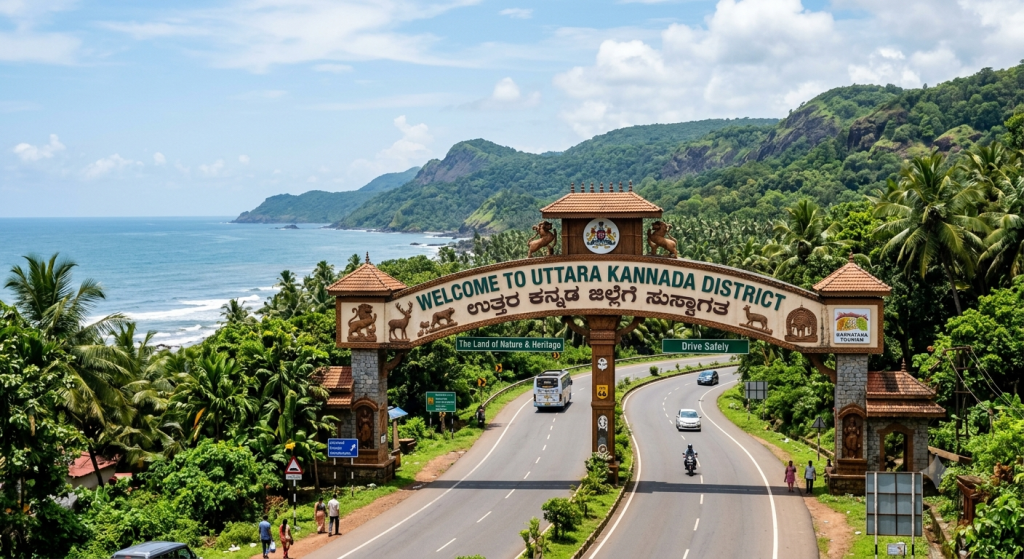
Welcome to Uttara Kannada District, a beautiful coastal and Western Ghats region of Karnataka known for its stunning beaches, lush forests, waterfalls, rivers, wildlife, and rich cultural heritage. The district offers a unique blend of natural beauty, historic places, traditional art, and vibrant local communities. From the scenic coastline of Karwar and Gokarna to the forests and adventure destinations of Dandeli, Uttara Kannada provides memorable experiences for visitors and residents alike. With its diverse landscapes, peaceful surroundings, and rich heritage, the district stands as one of Karnataka’s most attractive destinations for tourism, nature, culture, and adventure.
Historical Significance
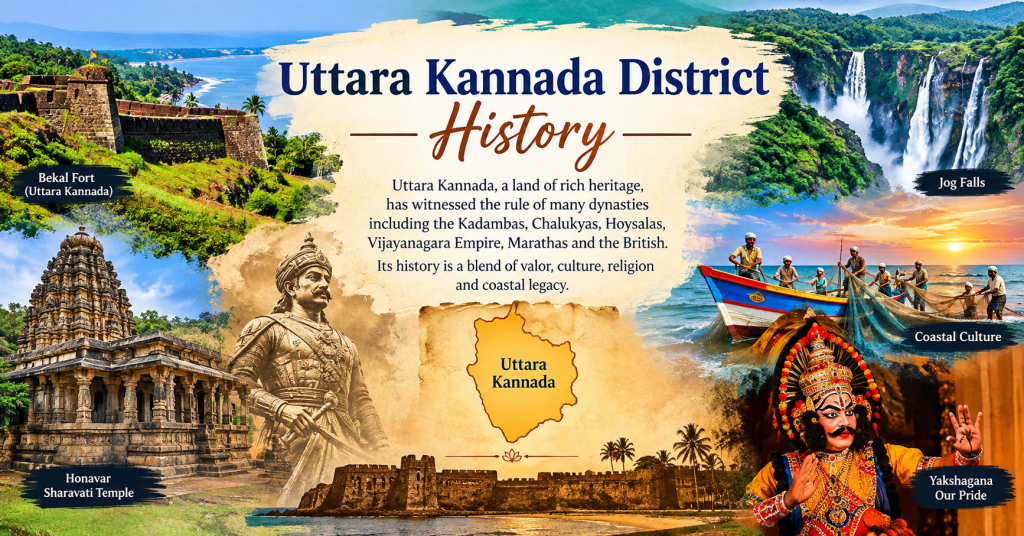
Uttara Kannada is a historically rich district in Karnataka, known for its ancient temples, forts, coastal heritage, and vibrant cultural traditions. The region has witnessed the rule of several prominent dynasties, including the Kadambas, Chalukyas, Hoysalas, Vijayanagara Empire, Marathas, and the British. Its strategic location along the Arabian Sea made it an important centre for trade and maritime activities. Places such as Banavasi, Gokarna, Mirjan Fort, and the historic coastal towns reflect the district’s glorious past. Today, Uttara Kannada proudly preserves its historical monuments, traditional arts, religious heritage, and unique coastal culture.
Geography & Climate
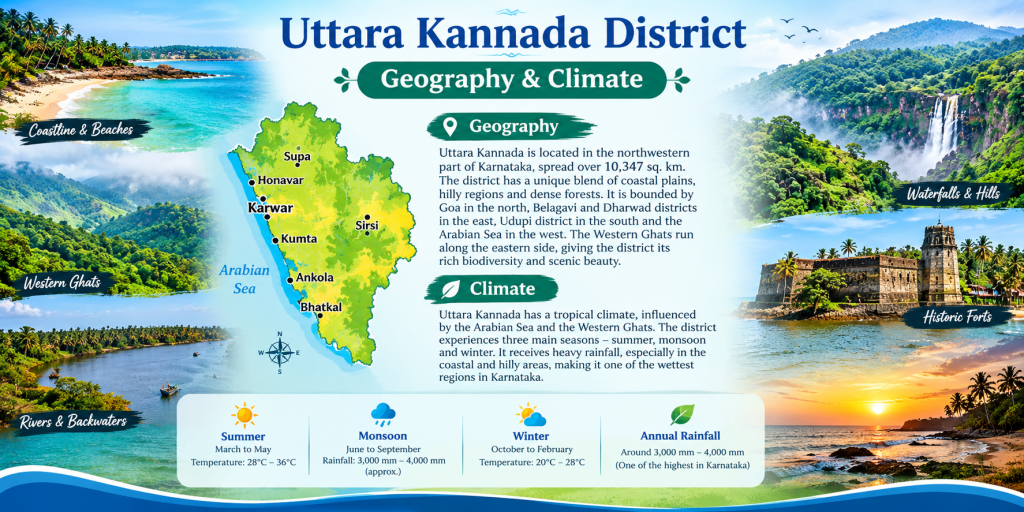
Uttara Kannada is located in the northwestern part of Karnataka and is known for its diverse geographical features, including the Arabian Sea coastline, coastal plains, the Western Ghats, dense forests, rivers, waterfalls and hills. The district’s unique location between the coast and the Western Ghats contributes to its rich biodiversity and scenic beauty. Uttara Kannada experiences a tropical climate influenced by the Arabian Sea and the Western Ghats. Summers are generally warm and humid, while winters are comparatively pleasant. The district receives heavy rainfall during the southwest monsoon, particularly in the coastal and hilly regions, transforming the landscape into lush greenery and supporting its forests, rivers and agricultural activities.
Culture & Heritage
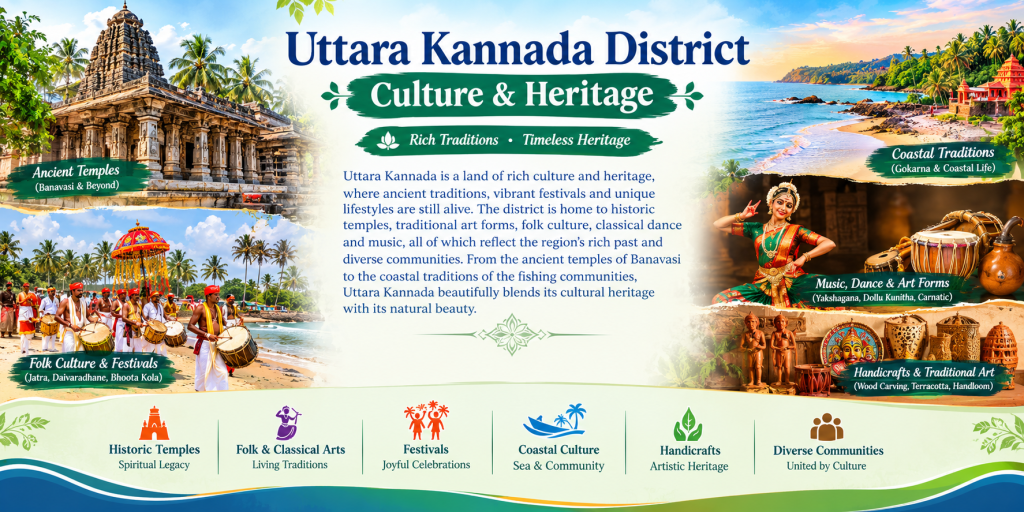
Uttara Kannada is renowned for its rich cultural heritage, vibrant traditions, and diverse communities. The district is home to ancient temples, historic monuments, traditional festivals, folk arts, music, dance forms such as Yakshagana, and unique coastal customs. Places like Banavasi, Gokarna, and Mirjan reflect the region’s historical and spiritual significance. Traditional crafts, local cuisines, religious celebrations, fishing traditions, and village festivals add to the cultural identity of Uttara Kannada. The district continues to preserve its age-old customs and artistic traditions while embracing modern development, making its culture and heritage an important part of Karnataka’s identity.
Major Towns of Uttara Kannada District
| Town | Karwar |
| Category | Municipality & District Headquarters |
| Known For | Beaches, Naval Base, Port and Coastal Tourism |
| Economy | Trade, fishing, tourism, port-related activities and services. |
| Special Feature | Administrative headquarters of Uttara Kannada District with important coastal and maritime significance. |
| Tourist Places | Devbagh Beach, Rabindranath Tagore Beach, Sadashivgad Fort and nearby islands. |
Economic Growth
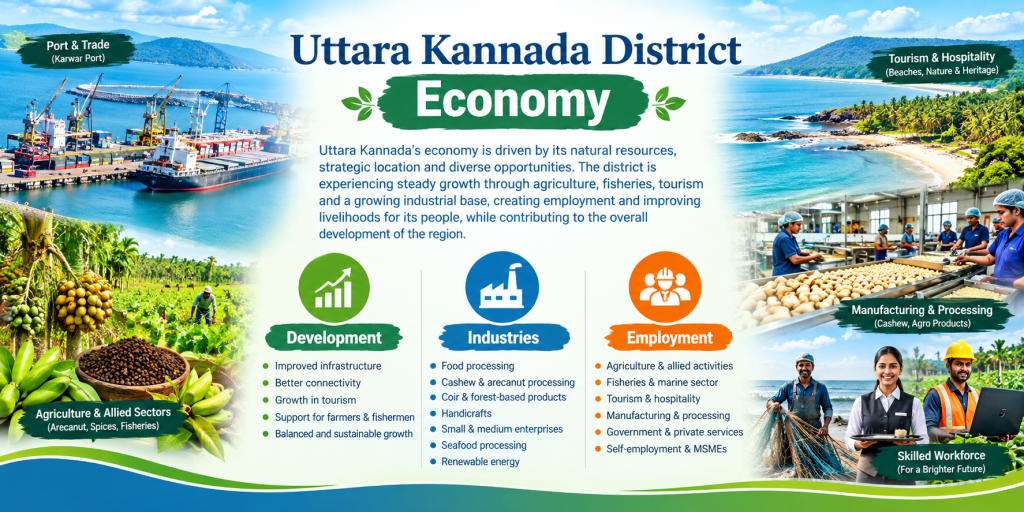
Uttara Kannada has a diversified and growing economy supported by its rich natural resources, agriculture, fisheries, forestry, industries, MSMEs, tourism, trade and commerce. The district’s long coastline, fertile agricultural areas, forest resources and tourism potential create opportunities for employment, business development and investment. Agriculture and allied activities support rural livelihoods, while industrial and service-sector activities contribute to economic growth. The district also has strong potential in food processing, marine products, horticulture, handicrafts and other value-added products. Its coastal connectivity and commercial centres further support trade, transportation and export-oriented activities.
Nature & Wildfire
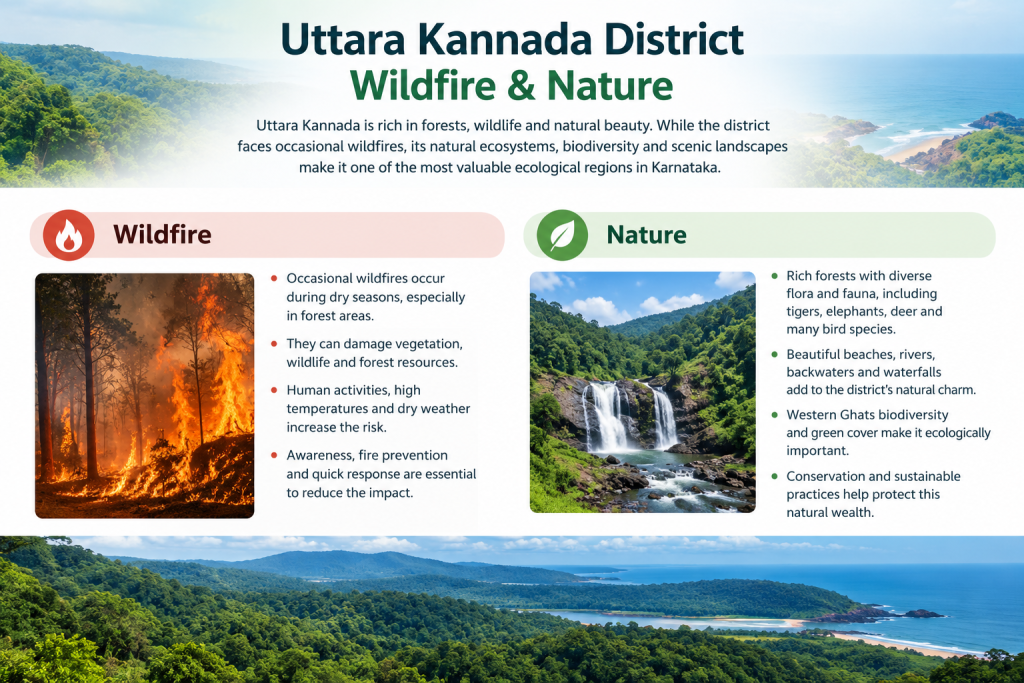
Uttara Kannada is one of Karnataka’s most naturally diverse districts, with extensive forest areas, Western Ghats landscapes, rivers, waterfalls, wetlands, beaches and rich wildlife. The district supports a wide variety of plants, birds and animals, making its forests and coastal ecosystems important for biodiversity conservation.
During the dry season, wildfires can become a major threat, particularly in forested areas with dry leaves and vegetation. High temperatures, prolonged dry weather and human activities can increase the possibility of forest fires. Wildfires can damage vegetation, reduce forest cover, disturb wildlife habitats and affect the overall ecological balance.
The natural environment of Uttara Kannada also provides opportunities for eco-tourism, nature-based activities and sustainable livelihoods. Protecting forests, wildlife, rivers and coastal areas through conservation and responsible tourism is essential for maintaining the district’s natural wealth for future generations.
District Administration
District Administration
The district administration coordinates government departments, public services, welfare programmes and overall development activities across Uttara Kannada.
Taluks
The district is organized into taluks that support local administration, revenue services, public welfare and effective delivery of government services to citizens.
Revenue Divisions
Revenue divisions manage land and revenue administration, certificates, land records and other important revenue-related services for the people.
Gram Panchayats
Gram Panchayats provide rural local governance and support sanitation, basic infrastructure, community services and village-level development programmes.
Municipalities
Municipalities manage urban civic services such as sanitation, roads, drainage, water supply, waste management and other essential public services.
Important Government Offices
Important government offices provide essential administrative, revenue, development and public services through district and taluk-level departments.
Education & Healthcare
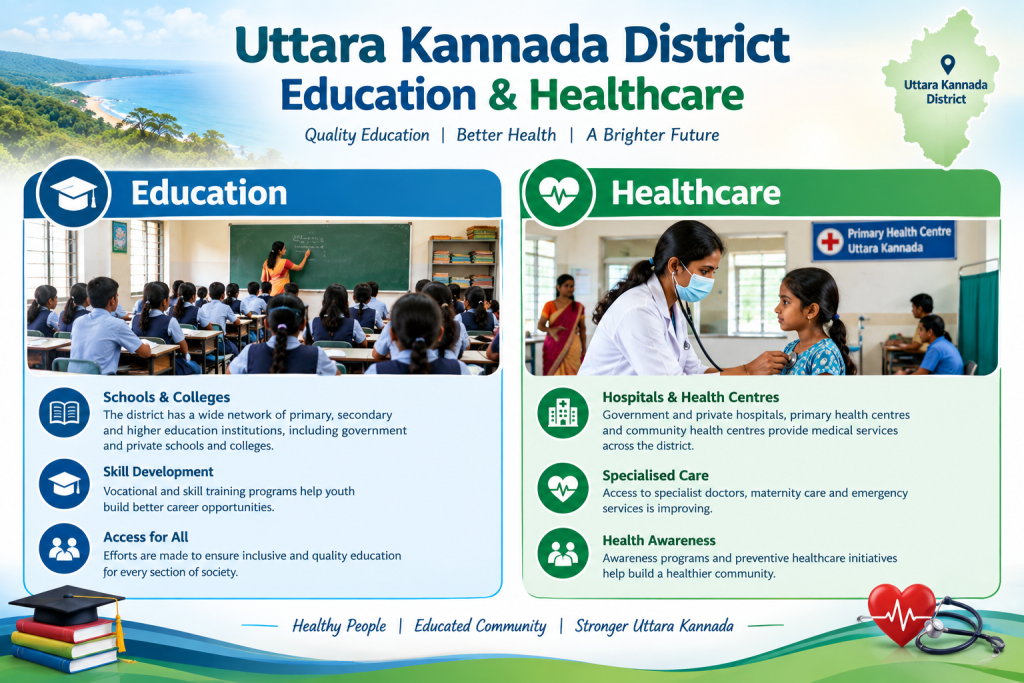
Uttara Kannada has a well-established network of schools, colleges and higher education institutions that supports learning and skill development across the district. Educational facilities provide opportunities for students in both rural and urban areas, while vocational and skill-development programs help youth prepare for employment and future careers.
Uttara Kannada provides healthcare services through government and private hospitals, primary health centres and community health facilities. These services support preventive care, emergency treatment, maternal and child healthcare, and general medical needs, helping improve the health and well-being of communities throughout the district.
Culture & Traditions
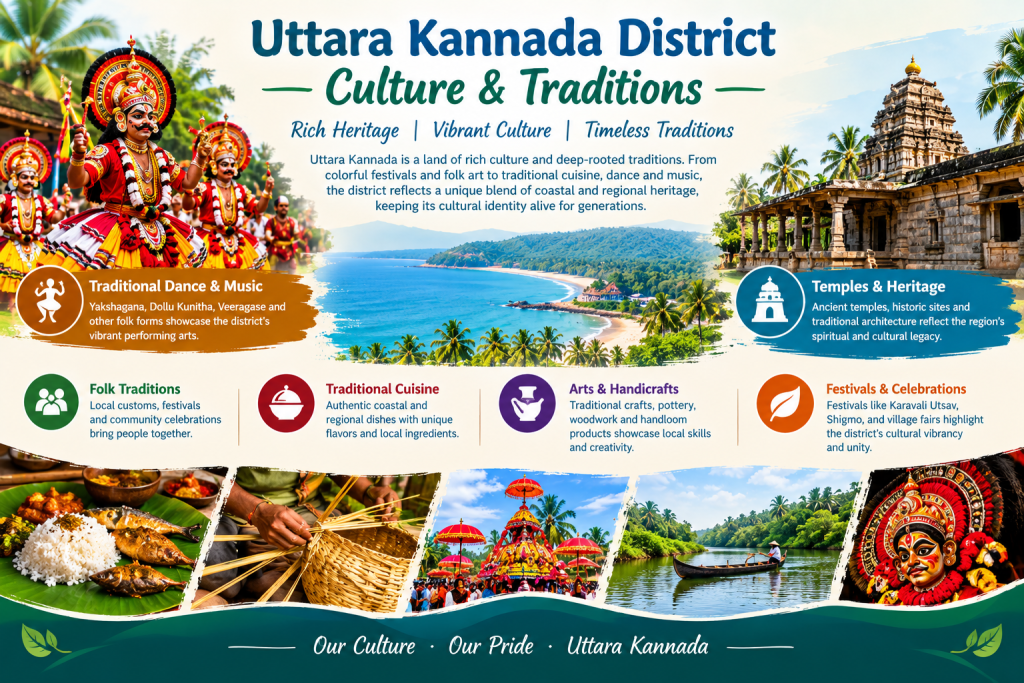
Uttara Kannada district is known for its rich cultural heritage, traditional lifestyle, and strong connection with nature. The culture reflects a beautiful blend of coastal Karnataka and the Western Ghats, with Kannada, Konkani, and other local traditions influencing everyday life. Traditional festivals such as Uttara Kannada’s village fairs, Deepavali, Ugadi, Navaratri, Ganesh Chaturthi, and local temple festivals are celebrated with great devotion and community participation. Folk traditions such as Yakshagana, Dollu Kunitha, and other regional performing arts are important parts of the district’s cultural identity. Traditional foods, handicrafts, folk songs, rituals, and customs passed down through generations further enrich the local heritage. The district’s temples, mosques, churches, historic sites, and community celebrations also showcase its diverse cultural traditions and peaceful coexistence.
Agriculture & Rural Development
Major Crops
Paddy, maize, pulses, vegetables and other seasonal crops are cultivated across different parts of Uttara Kannada district.
Plantation Crops
Arecanut, coconut, cashew, pepper and other plantation crops are important sources of income for farmers in the district.
Horticulture
The district's tropical climate supports fruit, vegetable, spice and horticultural production in several taluks.
Farmers & Rural Economy
Agriculture provides employment and supports the livelihoods of many rural households through farming and allied activities.
Water & Irrigation
Heavy monsoon rainfall, rivers and local water resources contribute significantly to agricultural activities in the district.
Sustainable Agriculture
Natural farming practices, soil conservation, agroforestry and sustainable cultivation can help protect the district's rich ecological resources.
District Statistics
Area
10,277 sq. km
Mandals
12 Mandals
Villages
1,437 Villages
Total Population
14.37 Lakh+
Male Population
7.26 Lakh+
Female Population
7.11 Lakh+
Urban Population
3.5 Lakh+
Rural Population
10.8 Lakh+
Literacy Rate
84.06%
Coastline
320 km
Towns
12 Towns
Revenue Divisions
4 Divisions
Why Uttara kannada District
Rich Natural Beauty
Uttara Kannada is known for its lush forests, scenic landscapes, rivers, waterfalls and beautiful natural surroundings.
Beautiful Coastline
The district has a long Arabian Sea coastline with beautiful beaches, islands and scenic coastal destinations.
Tourism
From waterfalls and hill stations to beaches, temples and wildlife, Uttara Kannada offers many attractive tourism destinations.
Agriculture & Forests
Agriculture, horticulture and forest resources play an important role in the district's rural economy and livelihoods.
Rich Culture & Heritage
The district has a rich cultural heritage reflected through traditional festivals, temples, art forms and local customs.
Wildfire & Nature
Uttara Kannada's extensive forests and natural landscapes support diverse wildlife while requiring protection from forest fires.