
2026

BreakingNews

Landslide fears mount as NH safety measures lag across Uttara Kannada district

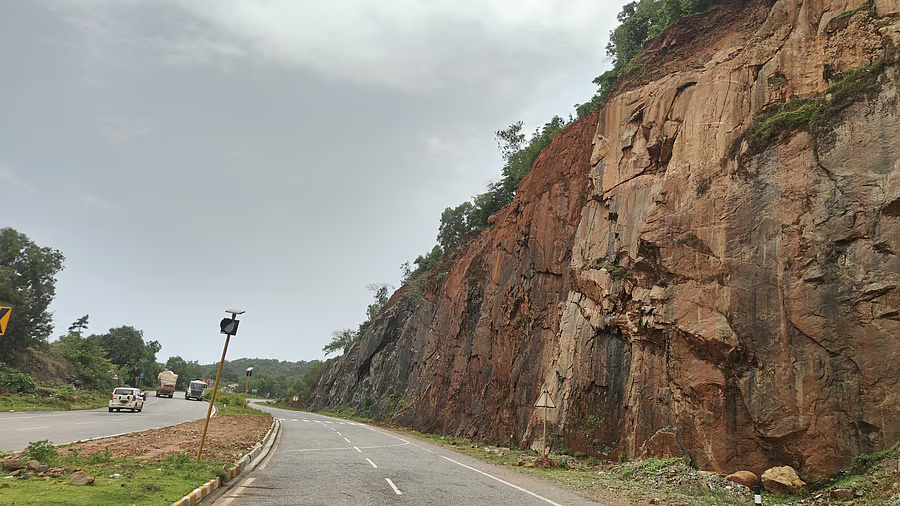
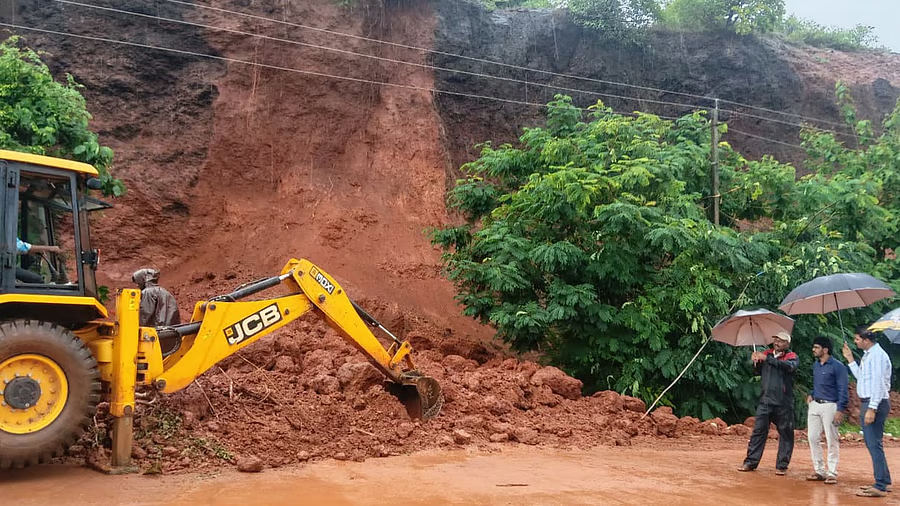
The monsoon season has once again raised concerns over landslide risks along National Highway 66 in Uttara Kannada, where steep Western Ghats slopes, heavy rainfall and ongoing road activity create vulnerable conditions. Recent precautionary measures show that several stretches require close monitoring and stronger safety arrangements. In July 2026, the Uttara Kannada district administration introduced one-way traffic on a section of NH-66 between Binga and Arga in Karwar taluk after continuous heavy rain increased the possibility of soil, rock and debris falling onto the highway. The restriction was introduced as a precaution during the monsoon season. The district’s concerns are reinforced by the deadly Shirur landslide of July 2024, when a massive slope failure struck NH-66 during intense rainfall. The incident disrupted traffic for weeks and triggered the deployment of rescue teams and heavy machinery. When the road was reopened, authorities imposed measures including single-lane traffic, a 20-kmph speed limit, warning signs, spotters, barricades and restrictions on parking near vulnerable locations. However, the continuing need for geological investigations highlights the longer-term challenge. Engineering-geological investigations of the Shirur landslide-affected zone and nearby portions of NH-66 have been underway, with mitigation measures being discussed with the National Highways Authority of India. During periods of intense rainfall, exposed slopes and drainage problems can quickly turn into road-safety hazards. Warning boards, protective barriers, slope stabilisation, proper drainage, regular inspections and trained spotters are therefore essential at identified landslide-prone locations. For commuters, the message is clear: avoid unnecessary stops in vulnerable stretches, follow temporary traffic restrictions and remain alert to falling rocks, debris and sudden road closures. For authorities, timely preventive action before and during heavy rainfall remains critical to preventing another major tragedy on Uttara Kannada’s vital highway network.
BreakingNews

Heavy rains pound Uttara Kannada; Supa, Kadri dams clock inflows

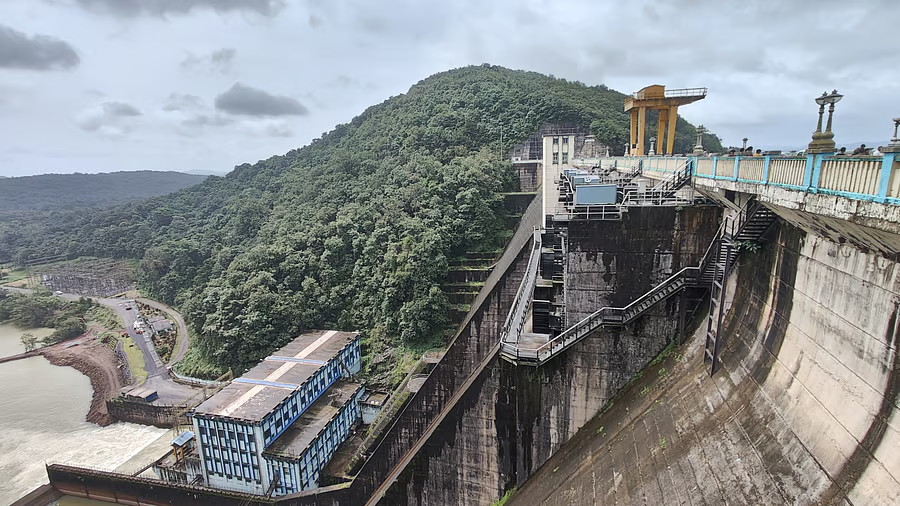
Uttara Kannada district witnessed intense monsoon activity, with several coastal and interior taluks receiving heavy rainfall. The downpour led to a noticeable rise in inflows into major reservoirs, including the Supa, Kadra and Kodasalli dams. Karwar, Ankola, Honnavar and Bhatkal experienced particularly heavy showers during periods of intensified monsoon activity. In Karwar, persistent rain caused waterlogging on several roads, while a landslide near Ramateertha Cross on National Highway 66 in Honnavar temporarily disrupted traffic. The increasing inflows into reservoirs are important for the district’s hydropower generation and water management. Data reported for August 4 showed Supa receiving an inflow of about 41,041 cusecs, highlighting the impact of substantial rainfall in the Kali river basin. Uttara Kannada’s Western Ghats and coastal geography make the district particularly vulnerable to heavy-rainfall events, flash floods and landslides. The district administration notes that reservoir releases during exceptional rainfall can also increase flood risks for villages and settlements along riverbanks. With rainfall continuing during the monsoon, authorities and residents in vulnerable areas need to closely monitor reservoir levels, river conditions, landslide-prone roads and official weather advisories. The improved reservoir inflows can support water availability and hydropower generation, but they also underline the need for careful dam and flood management.

BreakingNews

Dry spell hits hydropower generation in Uttara Kannada

A prolonged spell of below-normal rainfall has affected water availability in Karnataka’s reservoirs, putting pressure on hydropower generation. Uttara Kannada is particularly important for hydropower because major rivers such as the Kali and Sharavathi support large hydroelectric projects in the district. The district’s disaster-management documents also identify drought and rainfall deficiency as recurring risks. The impact is linked to weaker inflows into reservoirs, which can restrict the amount of water available for electricity generation. Karnataka’s reservoir data showed that, as of 6 August 2026, the state’s 19 monitored reservoirs had about 63.51% live storage, compared with 75.65% at the same time in 2025. The wider national situation has also affected hydropower. India’s hydropower generation fell significantly during June and July 2026 as weak monsoon conditions reduced reservoir levels. Large hydropower generation was down 10.75% year-on-year during April 1–July 30, increasing dependence on other sources such as coal-based power. For Uttara Kannada, reduced water availability could affect power generation, irrigation and downstream water management if dry conditions persist. Recent reservoir observations show that important reservoirs in the district, including Kadra, Kodasalli, Supa, Tattihalla and Gersoppa, were below their respective maximum levels in early August. The situation highlights the importance of efficient reservoir management, water conservation, rainfall monitoring and diversified energy sources. With the district’s dependence on its rivers for hydropower, maintaining adequate water storage is essential for balancing electricity generation with irrigation, drinking-water needs and environmental requirements.

BreakingNews

35 govt schools in Uttara Kannada record zero admissions this academic year

Uttara Kannada is facing growing concern over declining enrolment in government schools. According to a report published in July 2026, 35 government primary and secondary schools in the district recorded zero new admissions in the current academic year. The affected schools are spread across rural areas, including parts of Karwar, Sirsi, Kumta and Ankola. The decline is linked to several factors, including the increasing preference for English-medium private schools, migration of families from rural areas to cities and neighbouring Goa, and competition from private institutions. Concerns have also been raised about infrastructure and the availability of permanent teachers in some government schools. The situation could affect the future of schools that continue to have very low or zero enrolment. The education department has considered measures such as merging schools with nearby institutions, while officials have also indicated that zero-enrolment schools are not automatically closed immediately. Schools can continue to accept admissions, and permanent closure may follow if enrolment remains at zero for three consecutive years. The issue highlights the need to strengthen government-school infrastructure, teaching quality, digital learning facilities and English-language education, while also improving awareness among parents about the opportunities available in government schools. Revitalising rural schools could help ensure that children in remote communities continue to have access to affordable and accessible education.

Listings
News
Home
Jobs
Contact