
BreakingNews

BreakingNews

Survivor from Uttara Kannada, who lost CA-wife in stampede, recounts horror

The Bengaluru stampede during the Royal Challengers Bengaluru victory celebrations on June 4, 2025, turned a moment of celebration into a devastating tragedy for several families. Among those affected was a survivor from Uttara Kannada who lost his wife, a young Chartered Accountant, in the crowd crush. The tragedy occurred outside M. Chinnaswamy Stadium as thousands of fans gathered to celebrate RCB’s title victory. A sudden surge in the crowd created chaos near the stadium entrances, leaving several people trapped and resulting in multiple deaths and injuries. The victim, Akshata Pai, was a 26-year-old Chartered Accountant and a gold medallist. Reports said she had taken leave and travelled to the celebration despite not being a regular cricket follower. Her death left her family and husband devastated. Survivors described an atmosphere that changed within moments as people pushed towards the stadium. What began as excitement quickly became panic, with people struggling to breathe and find a way out of the tightly packed crowd. The incident has since raised serious questions about crowd management, access control, emergency preparedness and the planning of large public celebrations. The tragedy also highlighted the risks associated with allowing huge crowds to gather in confined areas without adequate entry and exit arrangements. For the families who lost loved ones, the celebration became an unforgettable nightmare. The survivor’s account from Uttara Kannada brings a deeply personal dimension to the tragedy, reminding people that behind the statistics are families whose lives were permanently changed in a matter of minutes. The Bengaluru stampede remains a painful reminder that large public events require careful crowd planning, effective communication, sufficient emergency exits and strong safety measures to prevent celebrations from turning into disasters.
BreakingNews

Delegation urges Centre to drop projects harmful to Uttara Kannada

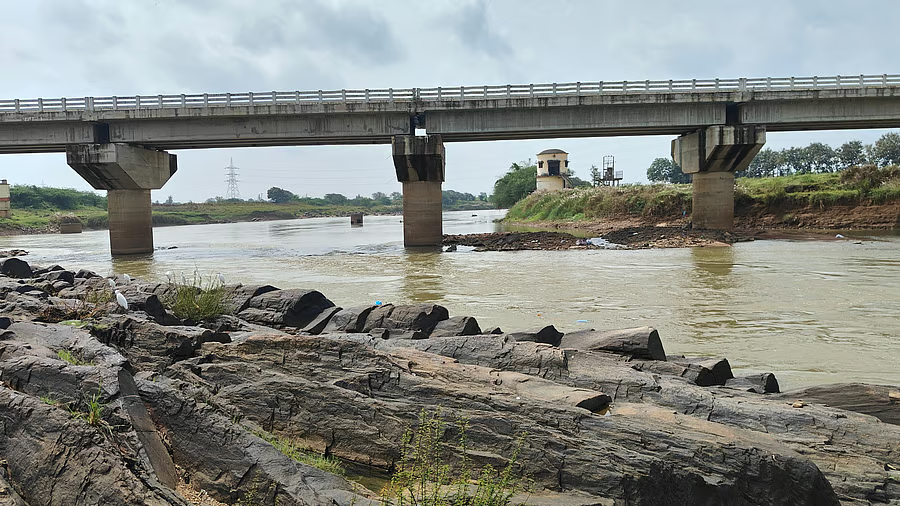
A delegation from Uttara Kannada has urged the Centre to reconsider and withdraw development projects that could cause long-term damage to the district’s forests, rivers, wildlife and traditional livelihoods. The demand comes amid growing concerns over several large infrastructure, hydropower and river-diversion proposals in the ecologically sensitive Western Ghats. One of the major concerns is the proposed Bedti–Varada river-linking project and the Aghanashini–Vedavathi river-linking proposal. In March 2026, a high-level delegation from Uttara Kannada met Karnataka Deputy Chief Minister D.K. Shivakumar and requested that the projects be dropped, citing environmental and livelihood concerns. The delegation included district leaders, legislators and members of the Bedti–Aghanashini Valley Conservation Committee. According to the delegation, large-scale river-linking works could require dams, tunnels, canals, pipelines, pumping stations and transmission lines, potentially resulting in forest loss and fragmentation of wildlife habitats. They also warned that changes in freshwater flows could affect downstream agriculture, drinking-water availability and coastal estuaries. Concerns Beyond River Linking The proposed Sharavathi Pumped Storage Project has also become a major environmental concern. The project is planned in the Sharavathi landscape, which includes the legally protected Sharavathi Valley Lion-Tailed Macaque Wildlife Sanctuary and its eco-sensitive zone. Environmental groups and local communities have questioned the project’s impact on forests, wildlife and river systems. Concerns have also been raised over the expansion of Kaiga nuclear power facilities, including proposals connected with Units 5 and 6. A proposed quarry for construction materials was reported to fall within the Kali Tiger Reserve, prompting objections from environmental activists who have sought an alternative location. Protecting Forests and Livelihoods Uttara Kannada is heavily dependent on its natural ecosystems. Fishing communities rely on rivers and estuaries, farmers depend on freshwater resources, and forest-dependent communities rely on the Western Ghats for their livelihoods. Environmental groups have argued that development decisions must therefore consider cumulative impacts rather than assessing large projects individually. The delegation’s appeal reflects a wider demand for development that respects ecological limits. Instead of proceeding rapidly with projects that could permanently alter rivers and forests, community representatives are calling for independent scientific assessments, transparent public consultations and stronger protection for environmentally sensitive areas. For Uttara Kannada, the debate is not simply about development versus conservation. It is about finding a balance that protects the district’s forests, rivers, wildlife and traditional livelihoods while allowing responsible infrastructure and economic development to move forward.

BreakingNews

In the estuaries of Uttara Kannada: A livelihood beneath the water

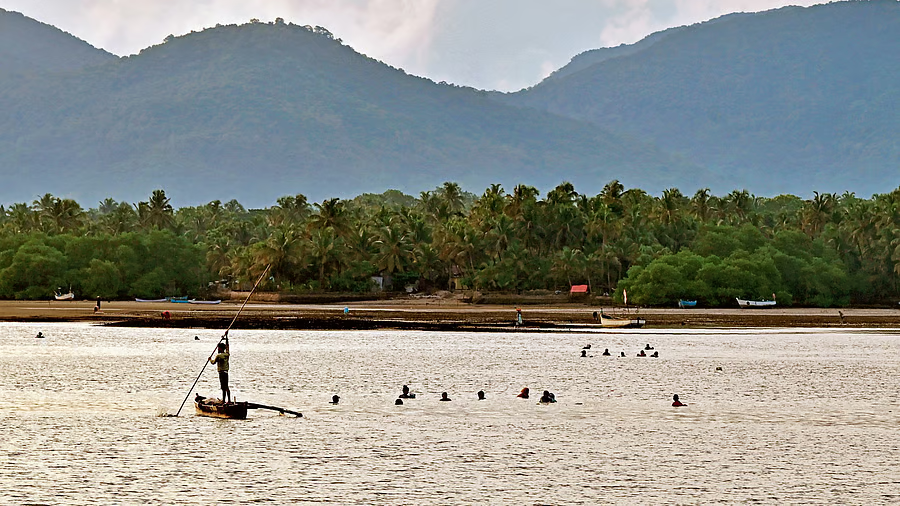
Along the coast of Uttara Kannada, rivers meet the Arabian Sea to create rich estuarine ecosystems that sustain both nature and people. The Kali, Aghanashini, Sharavathi, Gangavali and Venkatapur estuaries support fishing, shellfish collection, aquaculture, agriculture and other traditional livelihoods. For many coastal families, the water is more than a natural resource—it is their workplace. In the Aghanashini and Kali estuaries, people collect clams and other bivalves from mudflats during low tide. Harvesters carefully read the river’s currents, water colour and riverbed to identify productive areas. Women play an important role by collecting, cleaning, sorting and preparing the shellfish for sale. A Tradition Sustained by the Tides Clam harvesting remains an important supplementary source of income for communities around Karwar and Kumta. Villages such as Deevgi, Mankon, Mirjan, Musuguppa and Hondadakkal depend on the Aghanashini estuary for fishing and shellfish collection. Research on the Aghanashini fishing communities has found that hundreds of people are directly involved in collecting bivalves, clams and oysters, with fishing remaining the principal livelihood for many households. The estuaries also provide fish, prawns, crabs, oysters and mussels. Their productivity is closely connected to mangroves, tidal movements and nutrients carried downstream from the Western Ghats. Mangroves provide feeding and nursery grounds for fish and prawns while helping maintain the ecological health of the estuarine system. Women at the Heart of the Livelihood The contribution of women often extends beyond harvesting. After clams are brought ashore, women clean, sort and prepare them for local markets and household consumption. This makes estuarine resources an important part of the local household economy as well as the food culture of the district. Growing Pressure on the Estuaries This traditional livelihood is facing increasing pressure. Excessive harvesting, changes in natural river flow and activities such as sand extraction can affect clam populations and the wider estuarine ecosystem. Researchers have also stressed the importance of allowing smaller shellfish to remain in the water so that populations can regenerate. The challenge is therefore not simply to protect the estuary, but to protect the communities whose lives and incomes are intertwined with it. Sustainable harvesting, mangrove conservation, protection of mudflats and responsible management of river flows can help maintain both biodiversity and livelihoods. Protecting a Way of Life The estuaries of Uttara Kannada demonstrate how closely human livelihoods can be connected to healthy ecosystems. Every tide brings an opportunity for fishing or shellfish collection, while every change in the river can affect the families waiting along its banks. Protecting these waters means protecting more than fish and mangroves—it means safeguarding a traditional coastal economy, local food culture and a way of life passed from one generation to the next.

BreakingNews

Landslide fears mount as NH safety measures lag across Uttara Kannada district

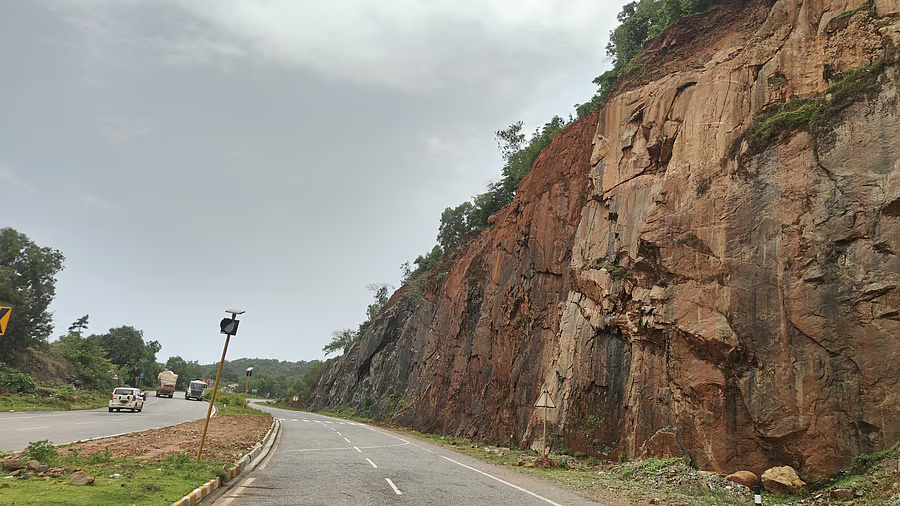
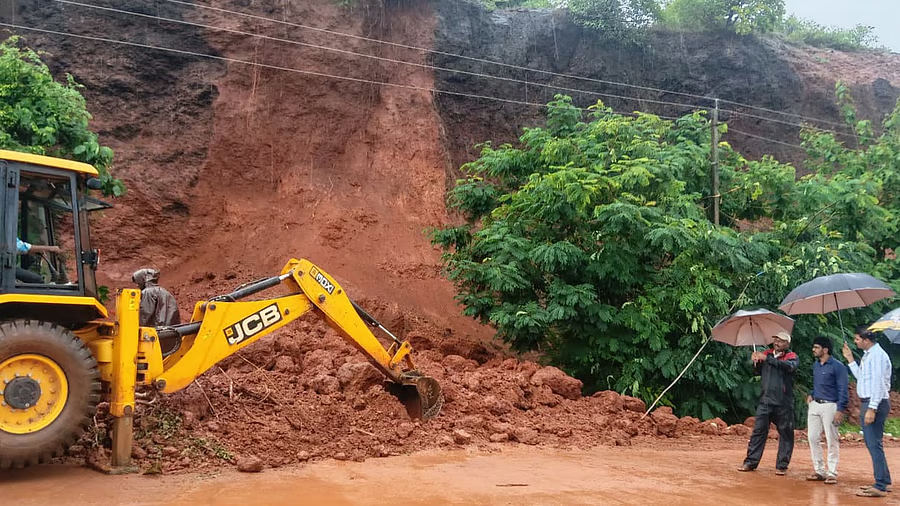
The monsoon season has once again raised concerns over landslide risks along National Highway 66 in Uttara Kannada, where steep Western Ghats slopes, heavy rainfall and ongoing road activity create vulnerable conditions. Recent precautionary measures show that several stretches require close monitoring and stronger safety arrangements. In July 2026, the Uttara Kannada district administration introduced one-way traffic on a section of NH-66 between Binga and Arga in Karwar taluk after continuous heavy rain increased the possibility of soil, rock and debris falling onto the highway. The restriction was introduced as a precaution during the monsoon season. The district’s concerns are reinforced by the deadly Shirur landslide of July 2024, when a massive slope failure struck NH-66 during intense rainfall. The incident disrupted traffic for weeks and triggered the deployment of rescue teams and heavy machinery. When the road was reopened, authorities imposed measures including single-lane traffic, a 20-kmph speed limit, warning signs, spotters, barricades and restrictions on parking near vulnerable locations. However, the continuing need for geological investigations highlights the longer-term challenge. Engineering-geological investigations of the Shirur landslide-affected zone and nearby portions of NH-66 have been underway, with mitigation measures being discussed with the National Highways Authority of India. During periods of intense rainfall, exposed slopes and drainage problems can quickly turn into road-safety hazards. Warning boards, protective barriers, slope stabilisation, proper drainage, regular inspections and trained spotters are therefore essential at identified landslide-prone locations. For commuters, the message is clear: avoid unnecessary stops in vulnerable stretches, follow temporary traffic restrictions and remain alert to falling rocks, debris and sudden road closures. For authorities, timely preventive action before and during heavy rainfall remains critical to preventing another major tragedy on Uttara Kannada’s vital highway network.

BreakingNews

Heavy rains pound Uttara Kannada; Supa, Kadri dams clock inflows

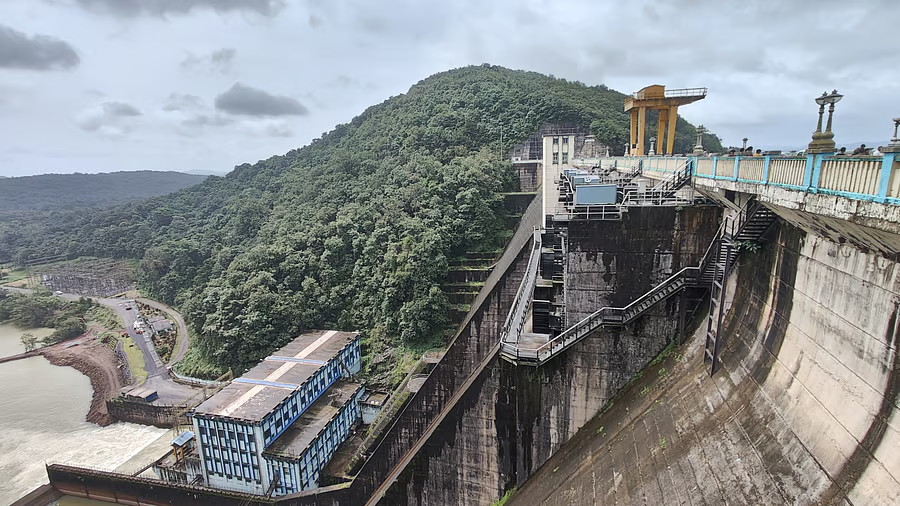
Uttara Kannada district witnessed intense monsoon activity, with several coastal and interior taluks receiving heavy rainfall. The downpour led to a noticeable rise in inflows into major reservoirs, including the Supa, Kadra and Kodasalli dams. Karwar, Ankola, Honnavar and Bhatkal experienced particularly heavy showers during periods of intensified monsoon activity. In Karwar, persistent rain caused waterlogging on several roads, while a landslide near Ramateertha Cross on National Highway 66 in Honnavar temporarily disrupted traffic. The increasing inflows into reservoirs are important for the district’s hydropower generation and water management. Data reported for August 4 showed Supa receiving an inflow of about 41,041 cusecs, highlighting the impact of substantial rainfall in the Kali river basin. Uttara Kannada’s Western Ghats and coastal geography make the district particularly vulnerable to heavy-rainfall events, flash floods and landslides. The district administration notes that reservoir releases during exceptional rainfall can also increase flood risks for villages and settlements along riverbanks. With rainfall continuing during the monsoon, authorities and residents in vulnerable areas need to closely monitor reservoir levels, river conditions, landslide-prone roads and official weather advisories. The improved reservoir inflows can support water availability and hydropower generation, but they also underline the need for careful dam and flood management.

BreakingNews

Dry spell hits hydropower generation in Uttara Kannada

A prolonged spell of below-normal rainfall has affected water availability in Karnataka’s reservoirs, putting pressure on hydropower generation. Uttara Kannada is particularly important for hydropower because major rivers such as the Kali and Sharavathi support large hydroelectric projects in the district. The district’s disaster-management documents also identify drought and rainfall deficiency as recurring risks. The impact is linked to weaker inflows into reservoirs, which can restrict the amount of water available for electricity generation. Karnataka’s reservoir data showed that, as of 6 August 2026, the state’s 19 monitored reservoirs had about 63.51% live storage, compared with 75.65% at the same time in 2025. The wider national situation has also affected hydropower. India’s hydropower generation fell significantly during June and July 2026 as weak monsoon conditions reduced reservoir levels. Large hydropower generation was down 10.75% year-on-year during April 1–July 30, increasing dependence on other sources such as coal-based power. For Uttara Kannada, reduced water availability could affect power generation, irrigation and downstream water management if dry conditions persist. Recent reservoir observations show that important reservoirs in the district, including Kadra, Kodasalli, Supa, Tattihalla and Gersoppa, were below their respective maximum levels in early August. The situation highlights the importance of efficient reservoir management, water conservation, rainfall monitoring and diversified energy sources. With the district’s dependence on its rivers for hydropower, maintaining adequate water storage is essential for balancing electricity generation with irrigation, drinking-water needs and environmental requirements.

BreakingNews

35 govt schools in Uttara Kannada record zero admissions this academic year

Uttara Kannada is facing growing concern over declining enrolment in government schools. According to a report published in July 2026, 35 government primary and secondary schools in the district recorded zero new admissions in the current academic year. The affected schools are spread across rural areas, including parts of Karwar, Sirsi, Kumta and Ankola. The decline is linked to several factors, including the increasing preference for English-medium private schools, migration of families from rural areas to cities and neighbouring Goa, and competition from private institutions. Concerns have also been raised about infrastructure and the availability of permanent teachers in some government schools. The situation could affect the future of schools that continue to have very low or zero enrolment. The education department has considered measures such as merging schools with nearby institutions, while officials have also indicated that zero-enrolment schools are not automatically closed immediately. Schools can continue to accept admissions, and permanent closure may follow if enrolment remains at zero for three consecutive years. The issue highlights the need to strengthen government-school infrastructure, teaching quality, digital learning facilities and English-language education, while also improving awareness among parents about the opportunities available in government schools. Revitalising rural schools could help ensure that children in remote communities continue to have access to affordable and accessible education.

Listings
News
Home
Jobs
Contact